 WAFU
WAFU
Sealing Performance Testing Exposed! 80% of Business Owners Don’t Know Whether to Choose Water or Air Testing!
In product sealing performance testing, choosing between water testing and air testing is a core challenge faced by many business owners. The choice of method not only affects testing accuracy but also directly impacts product quality and company costs. With 16 years of industry expertise, WAFU Brothers will quickly break down the key differences between the two methods in this article and provide practical selection advice!
1. What Are Water Testing and Air Testing?
Water Testing: Simply put, water testing exposes the product to a liquid environment (immersion, spraying, or water injection). If the product is not properly sealed, liquid will leak out or enter through the points of leakage, which can then be detected.
- Immersion Test: Immerse the product in water and observe if bubbles appear, indicating the presence of leaks.
- Spray Test: Spray water or a specific liquid onto the product surface to check if any liquid penetrates inside.
- Pressurized Water Injection Test: Inject pressurized water into the product and observe whether any water leaks out.
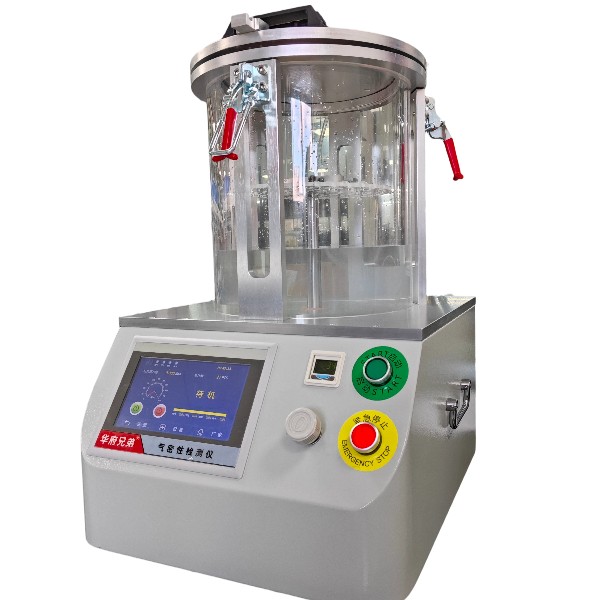
2. Air Testing: This involves creating a fixture to completely enclose the product and using gases (such as air or helium) to detect internal leaks. Techniques include the pressure decay method, flow testing, and helium mass spectrometry, which can detect extremely small leaks.
- Pressure Decay Method: Gas is filled into a sealed fixture, maintaining a certain pressure. Precision instruments monitor pressure changes to determine if a leak exists.
- Flow Testing: By measuring the difference between the mass flow of gas entering the test piece and the gas escaping from leaks, the presence of leaks can be determined.
- Helium Mass Spectrometry: Helium is injected into the test product. If there is a leak, helium escapes, and the mass spectrometer can accurately detect trace amounts, allowing precise leak identification.
2. Why Do Many Business Owners Struggle to Choose?
1. Special Product Designs and Unique Usage Environments
With continuous technological advancement, the IPX waterproof standards for products are increasing. Products that could previously be tested for leaks using water testing may no longer meet current requirements. Many products are delicate, and water testing could cause irreversible damage if leaks occur. However, due to the intended usage environment, water testing may still be necessary. By applying pressurized conditions simulating hundreds of meters of water depth, the testing environment can mimic real-world scenarios. For example, servo motors:
2. Cost Considerations
- Leakage testers usually require customized fixtures for each product. If there are many product types or large testing volumes, multiple fixtures need to be made, increasing costs.
- Although the methods used by leakage testers are suitable for most industry products, some products cannot be tested because the required pressure cannot be achieved. These products may require higher-precision, wider-range helium mass spectrometry testing, which is expensive.
- Water testing is low-cost and easy to maintain; air testing offers high precision but comes at a higher price, creating uncertainty for businesses regarding return on investment.
3. Diverse Testing Requirements
Different products have varying sensitivity and testing requirements for leaks. Without professional consultation tailored to their products, businesses struggle to make the best choice.
4. Advantages and Limitations of Water Testing
Advantages
- Low cost, simple equipment, suitable for batch testing.
- Intuitive operation, easy to train personnel.
- Effective for detecting large, obvious leaks.
Limitations
- Limited sensitivity; difficult to detect tiny leaks.
- May pose corrosion risks to product surfaces or internal materials.
- Products need cleaning and drying after testing, which affects production efficiency.
5. Advantages and Limitations of Air Testing
Advantages
- High sensitivity, capable of detecting very small leaks, ensuring high product quality standards.
- Suitable for high-end manufacturing, such as automotive, medical, and electronics industries.
- Fast testing; can be automated for online inspection, improving efficiency.
Limitations
- High equipment cost, requiring a significant investment.
- Requires professional technical support; operation is complex.
- Some dependence on environmental noise and temperature; testing conditions need to be controlled.
5. Recommendations: How to Decide Based on Actual Needs?
| Selection Factor | Suitable for Water Testing | Suitable for Air Testing |
|---|---|---|
| Product Type | Water-resistant or non-sensitive materials | Precision electronics, automotive parts, medical devices |
| Sensitivity Requirements | Medium to low sensitivity; detects obvious leaks | High sensitivity; detects tiny leaks |
| Production Efficiency Requirements | Longer testing time acceptable | Requires fast, automated testing |
| Budget and Cost Control | Limited budget; low-cost solution preferred | Higher budget; focus on quality and efficiency |
| Operator Skill Level | Ordinary operators sufficient | Requires professional technical training |
6. Conclusion
Sealing performance testing is a crucial step to ensure product quality, and selecting the appropriate testing method is essential. Both water testing and air testing have their advantages. Business owners should consider their product characteristics, required sensitivity, production efficiency, and budget when making a choice.
If you are still unsure whether to choose water testing or air testing, feel free to consult WAFU Brothers. We can provide comprehensive, all-scenario sealing performance testing solutions to safeguard your product quality!