WAFU
WAFU
Case Study: Plastic Connector Leak Testing
1. Why Is Leak Testing Essential for Plastic Connectors?
Plastic connectors are widely used in medical devices, household appliances, electronic products, and fluid transmission pipelines, where they typically serve the purpose of transferring liquids or gases. If leak does not meet the required standards, it can pose significant risks. Therefore, professional leak testing is essential.
| Key Reasons | Detailed Description |
|---|---|
| Ensure Sealing Performance and Safety | When plastic connectors are used for transporting gases or liquids, insufficient leak can cause issues such as pressure loss and fluid leakage, which compromise product stability and safety. |
| Improve Product Quality | Leak testing helps identify defective connectors with issues like micro-cracks or injection molding voids. This ensures that products meet expected standards in mass production and reduces after-sales problems. |
| Comply with Industry Standards | Industries such as household appliances have strict requirements and testing standards for component leak. |
| Adapt to Complex Operating Environments | Plastic connectors are often exposed to high temperature, high pressure, humidity, or corrosive media, making leak a critical performance factor. |
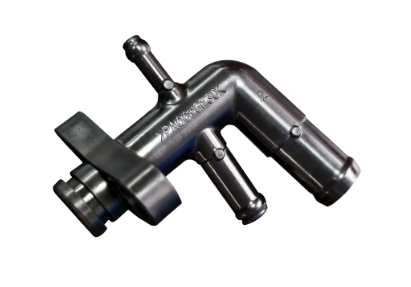 Figure 1: Plastic connector provided by the customer
Therefore, an leak tester is an indispensable sealing inspection and quality control tool in the plastic connector product line, used for structural verification, full inspection before delivery, and quality assurance testing.
2. Common Methods for Leak and Sealing Testing
| Method No. | Method Name | Principle | Applicable Scenarios | Features |
|---|---|---|---|---|
| 1 | Differential Pressure Method (Pressure Decay) | Detects leakage by monitoring pressure changes after pressurization | Suitable for testing the entire plastic connector body | Fast detection, ideal for production line integration |
| 2 | Mass Flow Method | Measures the real-time volumetric flow rate of leaked gas (sccm) | Suitable for high-level sealing verification, such as IP68 requirements | Enables precise quantitative assessment of leakage |
| 3 | Vacuum Negative Pressure Method | Places the plastic connector in a vacuum chamber and checks for external air penetration | Applicable for back pressure resistance testing in certain fluid transmission systems | Can be combined with submersion testing (bubble method) |
3. Typical Testing Points and Process (Using Whole Meter Mass Flow Testing as Example)
In leak testing of plastic connectors, the test points are usually determined by the structural characteristics of the connector, the pressure-bearing method, and the application scenario. The most common test points include the following:
| Testing Locations | Standard Testing Process |
|---|---|
|
1️⃣ Connector body 2️⃣ Interface position (pipe end / threaded port / snap-fit port) 3️⃣ Seal ring / sealing groove area 4️⃣ Corner / transition area 5️⃣ Assembly joint surface |
Clamping fixture: Place the plastic fitting into the dedicated fixture of the leak testing equipment, sealing it into the corresponding interface. |
| Inflation and pressurization: apply pressure (Pressure is customizable per user specifications) to the internal cavity and start steady pressure testing | |
| Flow/pressure difference monitoring: real-time leakage data judgment by the leak tester | |
| Pass/Fail Judgment: The equipment automatically compares the measurements with the set standards and outputs the test results. | |
| Result recording and traceability: integrated barcode binding/automatic data recording, supports MES system integration | |
4. Video Demonstration of the Testing Process
The testing instrument shown in this video is the WAFU Brothers customized all-in-one tester, which adopts the positive pressure sealing test method. The video below demonstrates the detailed operating procedure: