 WAFU
WAFU
Traditional vs. Modern Waterproof Testing in Smartphones
Nowadays, the penetration rate of smartphones is extremely high—almost everyone owns at least one, and some people own more than one. The usage scenarios have expanded from ordinary daily life to various extreme and complex environments. Waterproof performance has become an important factor for most users when choosing a product. Whether it is accidental splashes in daily life, exposure to rain during outdoor use, or brief immersion caused by misuse, smartphones inevitably need to meet waterproof performance requirements. This performance directly impacts both the lifespan and safety of the device. To ensure products meet international waterproof standards such as IP67 and IP68, manufacturers must conduct rigorous waterproof testing before shipping. With technological advancement, smartphone waterproof testing methods have evolved from traditional to modern approaches, and the application of leak testing technology has greatly improved both accuracy and efficiency.
I. Traditional Smartphone Waterproof Testing Methods and Characteristics
1. Immersion Method (Direct Testing)
The most common traditional method involves immersing the smartphone directly into water to check for leaks. This approach is straightforward but comes with the following issues:
- Highly destructive: Testing may cause water damage and render the phone unusable, leading to cost waste.
- Non-repeatable: After a single test, the product is already damaged and cannot re-enter the market.
- Lacks precision: Cannot provide accurate leakage data, only a pass/fail judgment.
2. Sprinkling/Rainfall Method
By simulating rain or water spray, this method observes waterproof performance. While less destructive than immersion, it still lacks precise data support, and results rely heavily on subjective judgment, making it unsuitable for efficient large-scale production testing.
3. Real-world Testing
Some factories test prototypes directly in outdoor or extreme environments. Although realistic, this approach is time-consuming, inefficient, and unsuitable for mass production.
Traditional waterproof tests also share a common drawback: after testing, residual moisture inside the phone must be removed. Otherwise, it may leave water stains, which is both time-consuming and labor-intensive. In summary, traditional waterproof testing methods generally suffer from high destructiveness, low efficiency, and lack of quantifiable results, making them unable to meet the requirements of modern intelligent manufacturing for high precision, efficiency, and low loss.
II. Modern Smartphone Waterproof Testing: Leak Testing
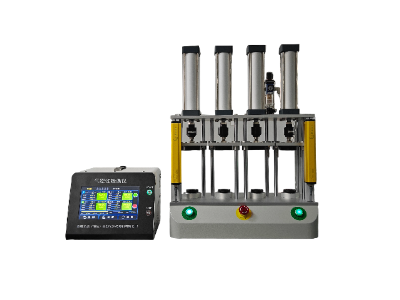
With the advancement of smart manufacturing and precision testing technologies, the Leak Tester has gradually replaced traditional methods, becoming the mainstream approach for modern smartphone waterproof testing. Its core principle is to use a gas pressure differential to simulate water pressure and evaluate the sealing performance of the phone’s casing and structure.
Leak Tester Testing Process
Leak testing methods generally fall into three categories: differential pressure testing, direct pressure testing, and flow testing. While the evaluation methods differ, the testing process is largely the same, as follows:
- Place the smartphone in a dedicated sealing fixture. Depending on the product, a dedicated fixture may not be necessary for certain sealed items.
- Introduce a stable gas (usually air or nitrogen) into the test chamber or the product itself.
- Continuously monitor gas pressure changes using sensors.
- Determine whether leaks exist based on pressure decay, flow variation, or differential comparison.
Step 4 essentially varies depending on the testing method, implementing different detection schemes, while the preceding steps remain consistent. For those interested in the three detection methods, refer to this article: Principles of Leak Testing.
III. Advantages of Modern Leak Testing
1. Non-destructive Testing
Leak testing does not expose the phone to liquids, preventing product damage and ensuring every unit can be sold as a qualified product.
2. High Precision and Quantifiable Results
Compared with the traditional “check if water entered” approach, the Leak Tester can measure pressure changes as small as a few Pascals, quickly and accurately identifying even minor leaks to guarantee precision.
3. High Efficiency, Suitable for Mass Production
A single test usually takes only 5–15 seconds, perfectly meeting assembly line requirements, and without residual water handling, greatly improving production efficiency.
4. Traceability and Consistency
Test data can be automatically recorded and archived for quality traceability and statistical analysis, avoiding errors caused by subjective human judgment.
5. Simulation of Various Environments
Leak testing pressure is adjustable, enabling simulation not only of common waterproof scenarios but also of extreme conditions such as deep water and harsh climates, verifying sealing reliability under diverse environments.
IV. Application Prospects
With the rise of 5G smartphones, foldable devices, and wearables, waterproof performance requirements are higher than ever. The Leak Tester, with its non-destructive, data-driven, and highly efficient advantages, has become the preferred solution for leading brands such as Apple, Samsung, and Huawei. Among WAFU Brothers’ partners, some clients already use Leak Testers for smartphones, smartwatches, and other electronic devices. Leak Testers are also widely applied in other electronics such as headphones and action cameras, playing a vital role in ensuring quality across the electronics industry.
While traditional smartphone waterproof tests once played a role in early manufacturing, their limitations have become increasingly evident in modern precision production. In contrast, modern waterproof testing technology represented by the Leak Tester—with its efficiency, accuracy, and non-destructiveness—has become the industry standard. As detection technology continues to evolve, modern leak testing has become the mainstream for waterproof evaluation, leading the way toward a more scientific and intelligent future of waterproof testing.