 WAFU
WAFU
Could a Tiny Hole Trigger Millions in Claims? The Truth Revealed by This EV Controller Leak Testing Case
1. What Is an EV Controller?
The EV controller is a core component of an electric vehicle and is often referred to as the “brain” of the EV. It receives and processes commands from the throttle and brake system, then precisely controls the motor to perform acceleration, deceleration, forward, and reverse movements.
2. Why Does an EV Controller Need Leak Testing?
Water ingress, which is common in everyday EV usage, can cause short circuits inside the controller’s PCB, leading to vehicle malfunction or complete shutdown. Therefore, sealing performance directly determines the lifespan and safety of the EV controller. To ensure stable operation in rainy or snowy conditions, high-quality controllers must meet strict industry standards.
| Adapt to Harsh Real-World Road Conditions | Electric vehicles are often driven in rain, through puddles, during washing, and even on muddy roads. Controllers are usually installed near the lower rear frame area, where they are directly exposed to water, mud, and dust impact. |
| Prevent Short Circuits and Direct Damage | Once water or moisture enters the controller, internal PCBs, MOSFETs, and chips may suffer short circuits, burnout, or long-term corrosion that leads to poor electrical contact. |
| Reduce After-Sales Risks | Failures caused by water ingress often appear months later. Each repair creates visible costs such as logistics, labor, and replacement parts, while also damaging customer trust. Large-scale sealing failures may even trigger product recalls. |
| Meet Industry Protection Standards | As a key component of electric vehicles, EV controllers are commonly required to meet IP67 or even IP68 dustproof and waterproof ratings. |
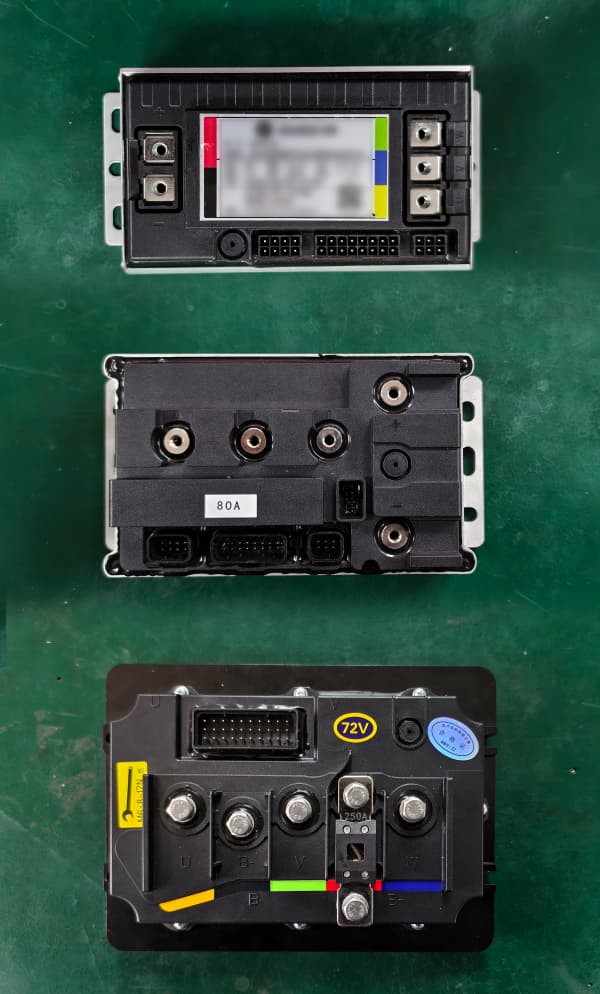 Figure 1: Three EV Controllers Requiring Leak Testing
3. Solution Design
This leak testing solution uses a vacuum negative pressure method to inspect whether the potting and sealing process around the EV controller joints contains bubbles, pores, loose adhesive layers, insufficient glue filling, or other microscopic defects invisible to the naked eye.
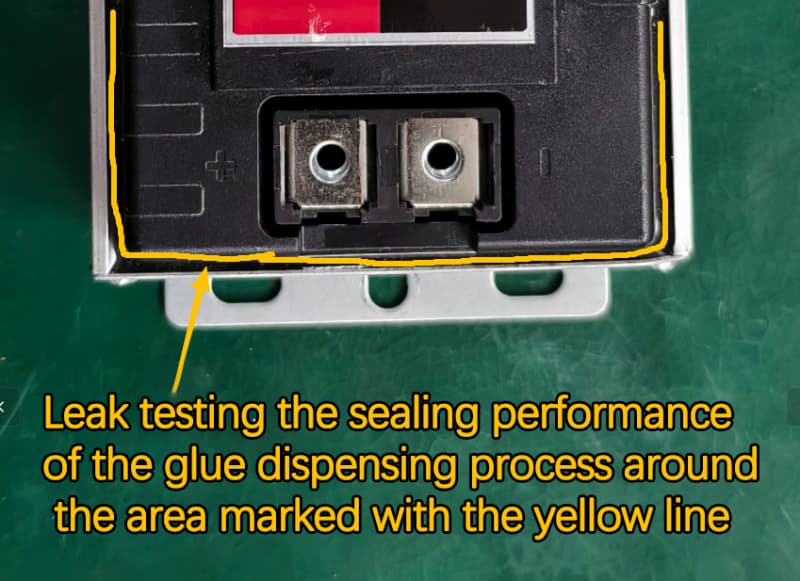 Figure 2: Main Leak Testing Areas of the EV Controller
This type of product belongs to the category of “sealed parts with openings,” so testing only requires vacuum extraction from the opening while monitoring pressure changes.
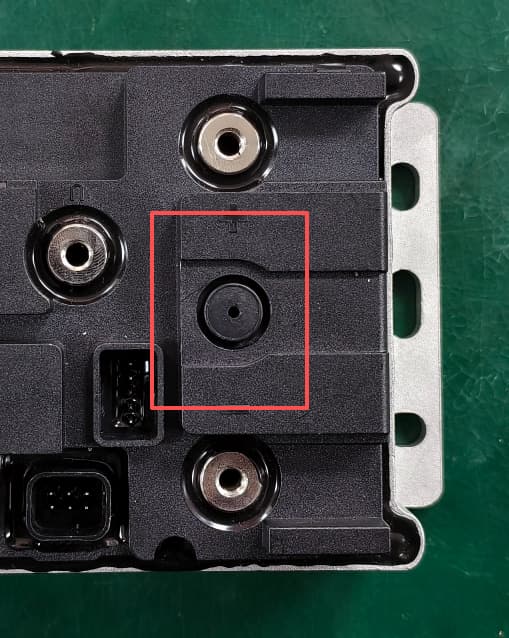 Figure 3: Vacuum Extraction Position
Testing Challenge: The surfaces around each opening are uneven and irregular. Some openings are even located independently at the edge, making downward sealing difficult. Designing an effective sealing structure for the opening became a major challenge.
Solution: Instead of sealing directly around the opening, the fixture seals the outer perimeter while vacuum extraction is performed through the center point. This avoids issues caused by irregular opening geometry and still achieves stable vacuum extraction.
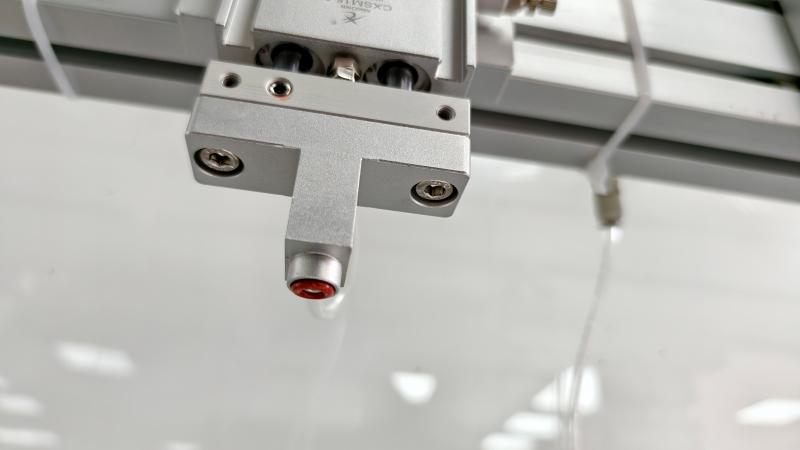 Figure 4: Fixture Used for Vacuum Sealing
4. Final Solution
As shown in Figure 1, three different controller models required testing. Based on the customer’s production line requirements, we designed and manufactured a four-station dual-channel EV controller leak tester for each model, meeting the customer’s high-speed production demands within a limited budget.
The fixtures are connected to the HF-Small Leak Tester , which features compact size, lightweight design, and testing accuracy that meets IP67/IP68 requirements, making it an ideal choice for budget-sensitive applications.
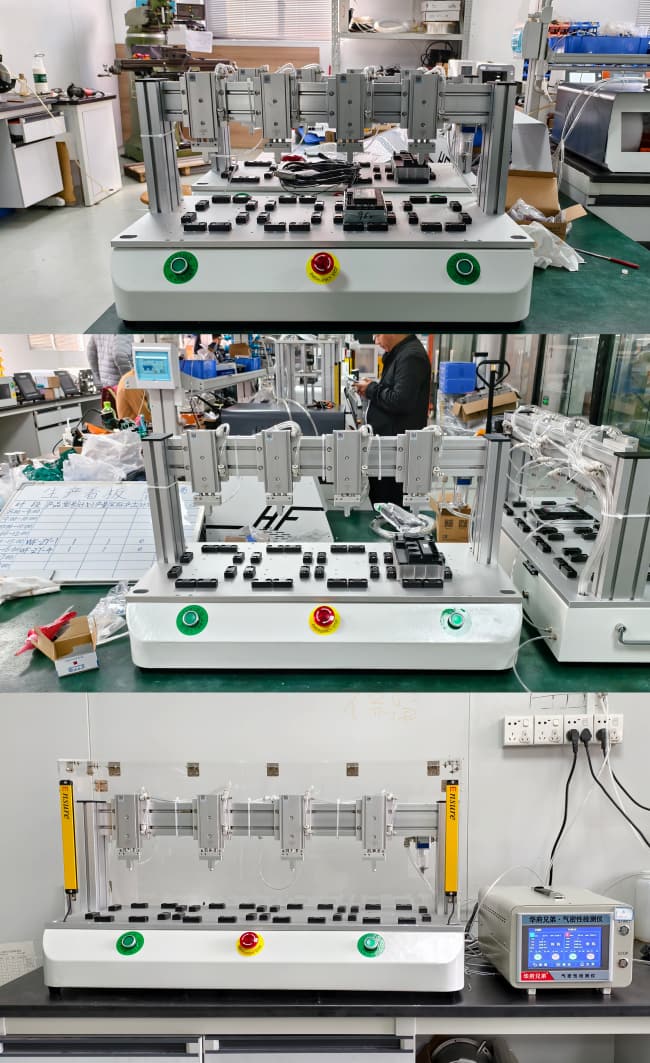 Figure 5: Dedicated Leak Tester for Three EV Controller Models
5. Leak Testing Demonstration
The test uses the direct pressure method, with the pressure condition set to negative pressure. The testing pressure is configured at -20kPa, and the leak limit is set to 150Pa.