 WAFU
WAFU
How to Choose a Leak Tester ? 5 Key Parameters That Determine Testing Accuracy
With the rapid development of industries such as new energy vehicles, medical devices, and consumer electronics, leak testing has become a critical process to ensure product quality. A suitable leak tester can not only help manufacturers intercept defective products with poor sealing, but also significantly reduce after-sales failure rates. However, with so many brands and models available on the market, how do you choose the right testing equipment for your products?
This article breaks down five key parameters that must be considered during selection, helping you avoid common pitfalls and accurately match your testing needs.
1. Testing Accuracy: The Core of Everything
Testing accuracy is the most critical technical indicator of a leak tester, directly determining whether tiny leaks can be detected.
| Parameter | Description |
|---|---|
| Sensor Accuracy | The higher the sensor accuracy, the more reliable the measurement results |
| Detection Sensitivity | Sensitivity determines the smallest detectable pressure change |
| Repeatability | Consistency of multiple tests on the same product |
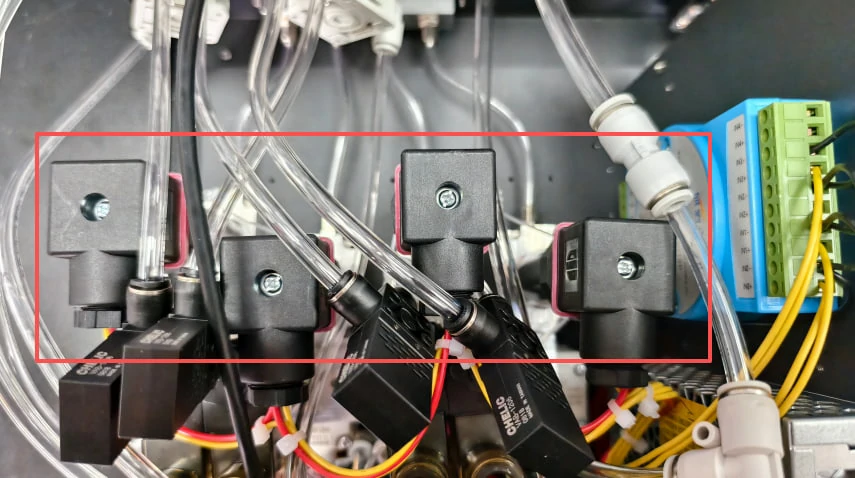
Common Pitfalls
Many manufacturers only claim “high accuracy” without specifying actual values. Reliable manufacturers like WAFU Brothers clearly indicate parameters such as 0.02%FS accuracy and 2–5Pa repeatability—these are verifiable performance indicators.
Selection Recommendations
- For high-demand scenarios such as new energy batteries and medical devices, choose accuracy of 0.05%FS or better
- For general applications such as consumer electronics and home appliances, 0.1%FS is sufficient
2. Pressure Range and Type
Different products have vastly different pressure requirements—a plastic housing may require only a few kPa, while metal sealed components may require several hundred kPa. If the pressure range is insufficient, the equipment cannot be used; if pressure control is inaccurate, test conditions become unreliable.
| Test Requirement | Recommended Pressure Range | Description |
|---|---|---|
| Vacuum / Negative Pressure Test | -100KPa ~ 0 | Suitable for sealed cavities, packaging bags, etc. |
| Low Positive Pressure Test | 0 ~ 300KPa | Common for consumer electronics and plastic parts |
| Medium & High Pressure Test | 300KPa ~ 3000KPa | Metal housings and high-pressure components |
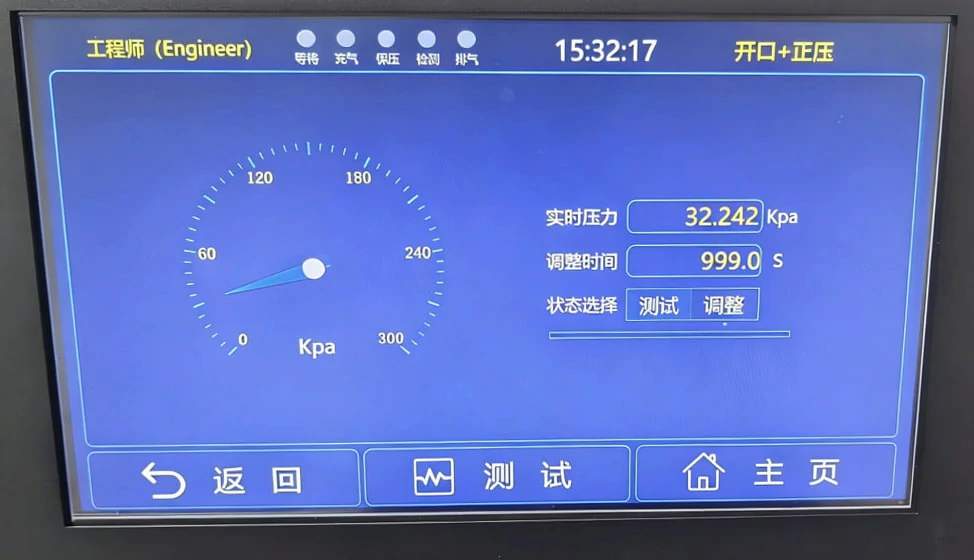
Selection Recommendations
- Select based on the actual working pressure of the product, leaving a 20% margin
- If testing multiple products, prioritize wide-range equipment
- If uncertain, choose a combined positive/negative pressure model for maximum flexibility
3. Testing Speed and Cycle Time
For batch testing on production lines, testing speed directly affects productivity.
| Stage | Time Proportion | Optimization Potential |
|---|---|---|
| Pressurization | Adjustable | Choose faster filling equipment and optimize fixture design |
| Stabilization | Depends on product volume | Smaller volume leads to shorter time |
| Testing | Depends on accuracy requirements | Higher accuracy requires more time |
| Exhaust | Adjustable | Fast exhaust valves can reduce time |
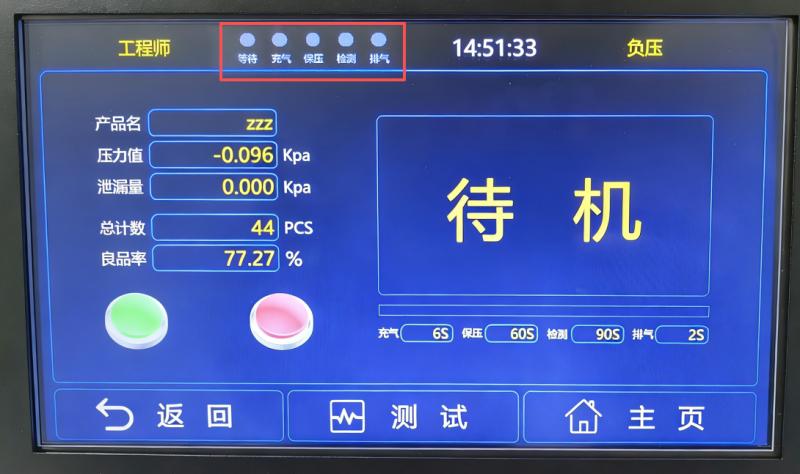
Selection Recommendations
- Single-station production line: control cycle time within 15–30 seconds
- Multi-station parallel: choose dual-station or four-station equipment to significantly improve efficiency
- WAFU Brothers multi-channel leak tester , supports simultaneous testing of different products, greatly improving efficiency
4. Fixture Compatibility and Customization Capability
Fixtures are the key bridge connecting the tester and the product, directly affecting testing reliability and operational convenience.
| Consideration | Description |
|---|---|
| Filling Design | Good filling design reduces pressurization time and improves efficiency |
| Sealing Method | End-face, inner hole, or outer diameter sealing should be selected based on product structure |
| Clamping Method | Manual, pneumatic, or automatic depending on cycle requirements |
| Changeover Time | Time cost for switching between different products |
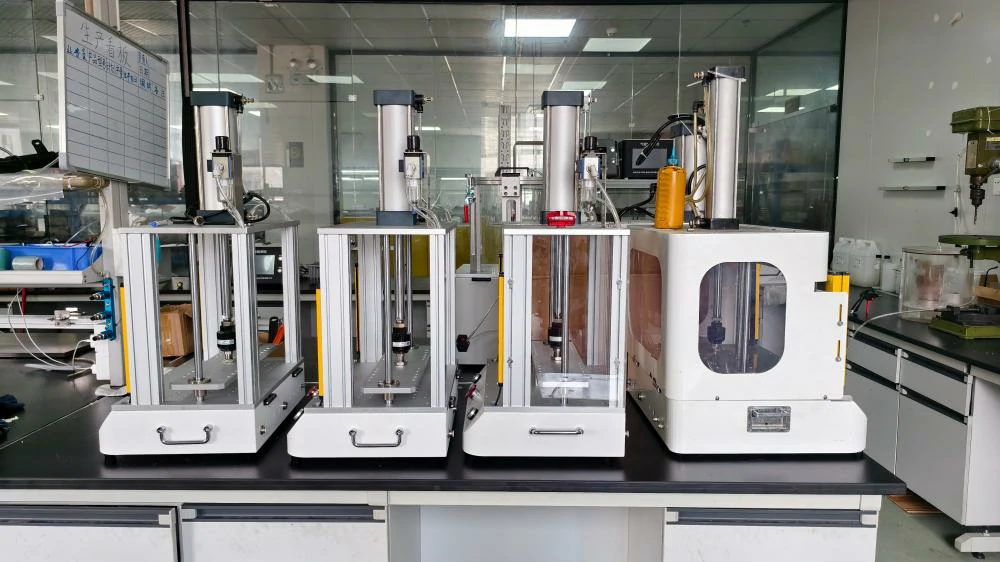
Selection Recommendations
- Choose manufacturers with customization capabilities rather than only standard machines
- Request fixture design drawings and sealing material solutions
- WAFU Brothers provides fully customized fixture services, designing contour-matching fixtures based on 3D drawings to ensure reliable sealing
5. Data Traceability and Digital Integration
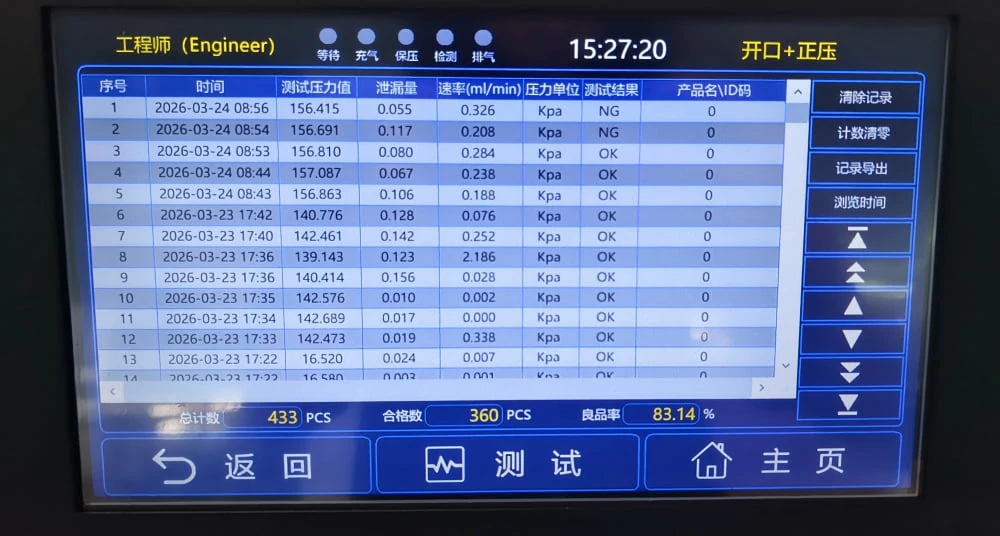
| Function | Purpose |
|---|---|
| Data Storage | Store test results locally with export capability |
| Communication Interfaces | RS485, USB, Ethernet for MES integration |
| OK/NG Judgment | Automatic result output with audio/visual alarms |
| Permission Management | Prevent unauthorized parameter modification |
| History Query | Trace records by time, batch, or product |
Selection Recommendations
- For automotive and medical industries with strict audits, ensure the equipment supports data export and traceability
- If integration with automated production lines is required, confirm support for I/O signal interaction
- WAFU Brothers leak testers support 100,000 data records with USB export to Excel
6. Conclusion
When selecting a leak tester, focus on testing accuracy, pressure range, testing speed, fixture compatibility, and data traceability. Only by combining these with your actual product requirements can you choose the most suitable equipment.
If you are struggling with product selection, feel free to contact the professional technical team at WAFU Brothers. We provide free sample testing and on-site technical support to help you accurately match the right testing solution and ensure every product meets sealing requirements.