 WAFU
WAFU
New Breakthrough in Leak Testing : Server Liquid Cooling Radiator Applications
When it comes to leak testing, many people’s first impression is often small-sized components such as valve bodies, sensor housings, and connectors. These products have relatively simple structures and clearly defined testing boundaries, making them the most common application scenarios in the industry today.
However, products like server liquid cooling radiators—large in size, with complex internal piping, and belonging to system-level structures—are rarely included in leak testing applications. On one hand, the testing difficulty is extremely high; on the other hand, they place much stricter demands on equipment capability and testing algorithms, making them uncommon in actual production lines.
1. Industry Challenge: Leak Testing Difficulties in Large Water Circulation Systems
Unlike traditional small components, this is a complete liquid cooling cabinet. From a leak testing perspective, server liquid cooling systems typically face the following challenges:
- Complex internal flow channels with multiple piping sections and connection structures.
- Large overall size, making test chamber design highly challenging.
- Micro leaks are difficult to detect, requiring extremely high testing precision.
For these reasons, it was once widely believed in the industry that: “Complete system-level water circulation systems are not suitable for 100% in-line leak testing and can only rely on individual component testing plus post-assembly sampling inspection.” However, this approach leaves significant leakage risks—because assembly errors in pipe joints and sealing rings often only become apparent at the system level.
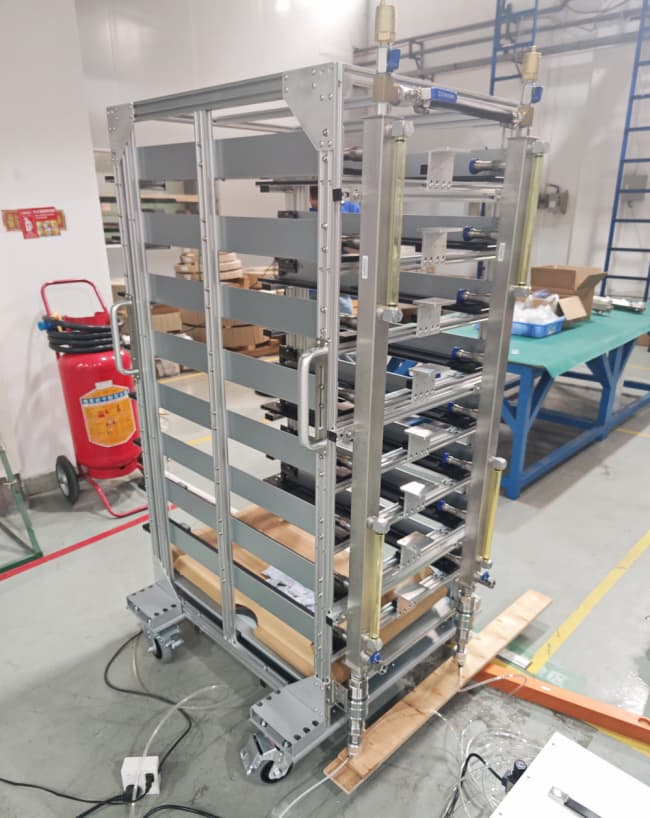
2. Breakthrough: From “Impossible” to Real Production Line Testing
WAFU Brothers directly addressed this industry pain point. After more than a year of technical research and development, breakthroughs were achieved in leak testing principles and algorithms. Today, WAFU Brothers leak testers have been successfully deployed on the production lines of liquid cooling server manufacturers, enabling in-line, 100% inspection and high-precision leak testing of complete water circulation radiators.
The successful implementation of this application not only signifies that leak testing for server liquid cooling radiators has evolved from a “high-difficulty challenge” into a “practical and executable solution,” but also provides a more reliable quality assurance method for the liquid cooling server industry.
More importantly, this breakthrough proves that even for complex, large-scale system-level products, stable and controllable leak testing can still be achieved through well-designed solutions.
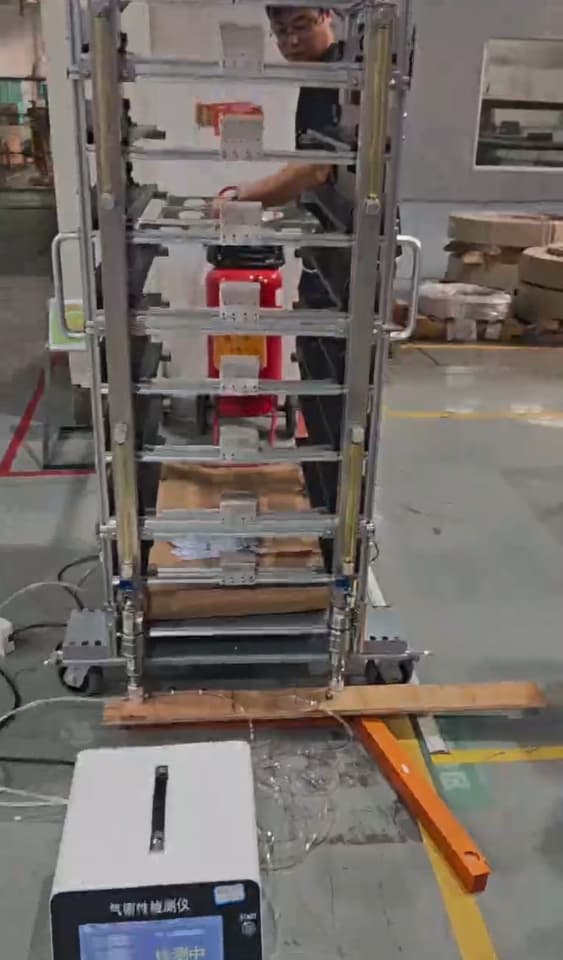
3. Continuous Expansion: More Possibilities for Complex Product Testing
With the rapid development of industries such as new energy, data centers, and energy storage, the demand for testing large and complex structures will continue to grow.
WAFU Brothers will continue to deepen its application scenarios, promoting the implementation of leak testing technology in more high-difficulty fields, providing customers with more practical and valuable testing solutions.