 WAFU
WAFU
How to Test the Sealing Performance of Waterproof Products? A Comprehensive Guide to Common Testing Methods, Procedures, and Equipment
With the development of industries such as consumer electronics, automotive, new energy, medical devices, and smart home appliances, more and more products are required to have excellent waterproof and dustproof performance. Whether a product needs to achieve IP67 or IP68, or meet other protection rating requirements, reliable sealing structures are essential. However, visual inspection alone cannot determine whether a product truly has good sealing performance. Therefore, leak testing has become an essential part of the product manufacturing process.
So, how is the sealing performance of waterproof products tested? Which testing method should manufacturers choose? This article provides a detailed introduction.
1. What Methods Are Available for Waterproof Product Leak Testing?
1. Water Immersion Testing (Traditional Testing Method)
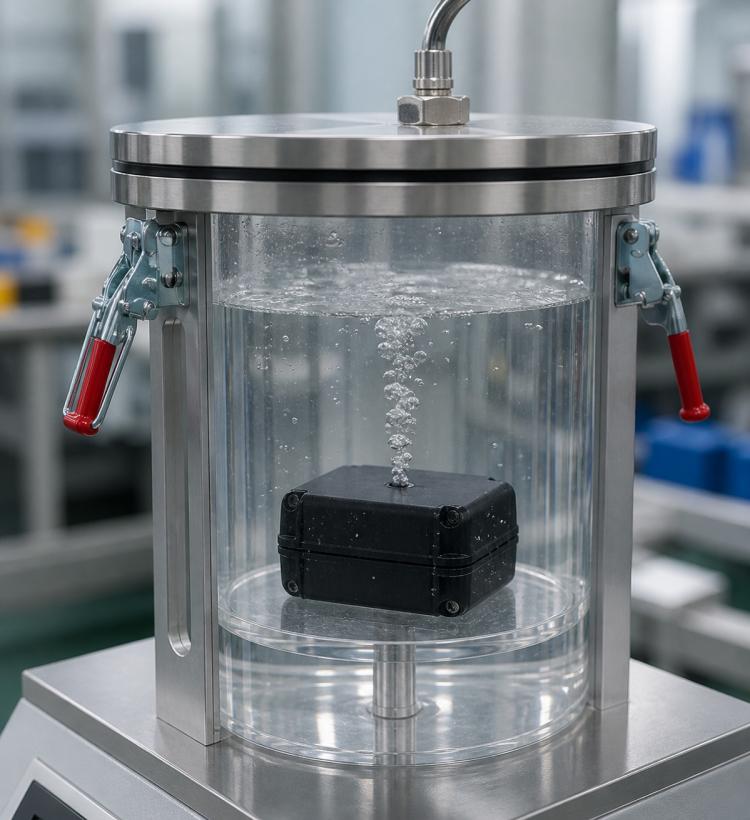
Water immersion testing is one of the earlier testing methods. The product is placed in water, and a certain amount of pressurized air is introduced into the product or test chamber to observe whether continuous bubbles are generated.
Advantages:
- Can visually identify relatively large leaks
- Can locate the leakage position
- Low equipment cost
Disadvantages:
- Cannot detect very small leaks
- Test results depend on manual judgment
- Relatively low testing efficiency
- Products may retain water after testing, making it unsuitable for high-volume testing of electronic products
As manufacturing requirements for quality and testing speed continue to increase, water immersion testing is increasingly being replaced by automated leak testing.
2. Leak Testing (The Mainstream Solution)
A leak tester introduces compressed air into the product, continuously pressurizes it, or applies negative pressure, and determines whether leakage exists by monitoring changes in pressure.
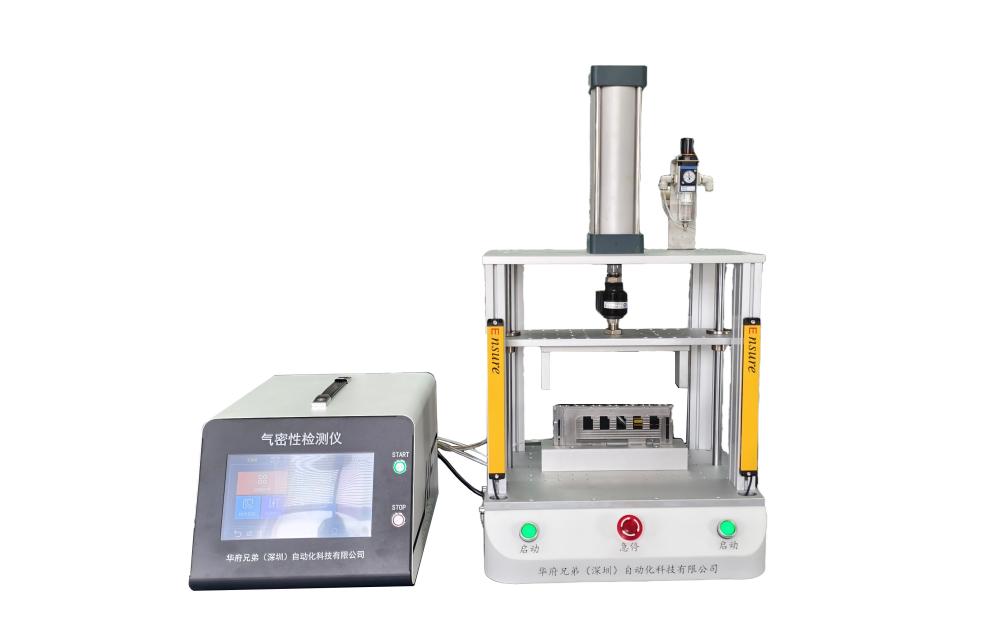
No water contact is required during the testing process, so it is also considered a non-destructive testing method. Compared with traditional water immersion testing, leak testing offers the following advantages:
- Fast testing speed
- Automatic pass/fail judgment
- Suitable for 100% online inspection
- Good repeatability
- High testing accuracy
- Can be integrated into automated production lines
- Test data can be stored for traceability
At present, most waterproof electronic products, automotive components, new energy products, and other products use leak testing as part of their final inspection process.
2. How to Choose the Right Testing Method?
Different products are suitable for different testing methods. The product structure, sealing requirements, testing efficiency, and accuracy requirements should all be considered when selecting a testing solution.
For general waterproof products, the Direct Pressure Method is widely used and is suitable for most products. For products with stricter leakage requirements or smaller internal volumes, Differential Pressure Method or Flow Method can be selected according to actual requirements.
The specific testing solution should be determined based on a comprehensive evaluation of the product structure, target protection rating, allowable leakage value, and daily production volume.
3. What Factors Affect Test Results?
Even when using the same leak tester, certain factors may affect the test results and cause deviations:
- Whether the test pressure and pressure-holding time are set appropriately
- Whether the sealing performance of the fixture is adequate
- Whether the sealing ring is worn
- Changes in ambient temperature
- Whether the air supply pressure is stable
- Test data can be stored for traceability
- Changes in product material elasticity
Therefore, in addition to selecting stable and reliable testing equipment, proper fixture design, optimized test parameters, and regular maintenance of sealing components are also essential for maintaining stable testing performance.
4. How to Improve the Leak Testing Efficiency of Waterproof Products?
For products with high daily production volumes, testing efficiency can be improved through the following methods:
- Select an appropriate testing method based on product characteristics
- Optimize pressure-holding time and testing time
- Use quick-change fixtures to reduce changeover time
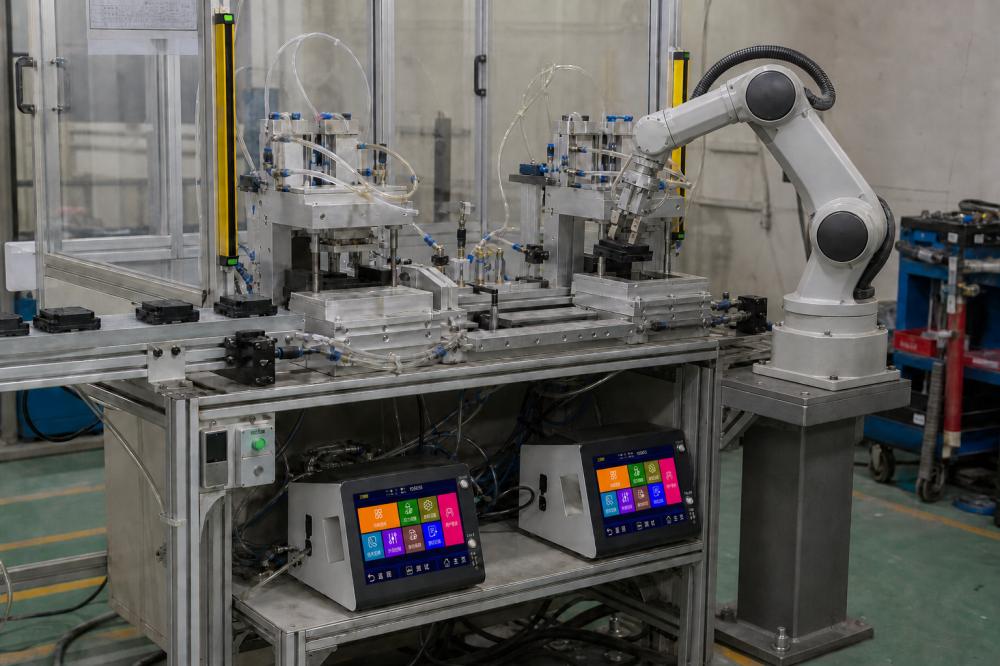
- Configure multi-station testing to significantly increase testing efficiency
- Combine with automatic loading and unloading equipment to achieve fully automated testing
5. Conclusion
As manufacturing continues to develop and waterproofing requirements become increasingly stringent, leak testing has become an important part of quality control for manufacturers. Compared with traditional water immersion testing, modern leak testing offers advantages such as fast testing speed, high accuracy, good repeatability, and automated integration, and is now widely used in consumer electronics, automotive, new energy, medical devices, and other industries.
No single testing method is suitable for every application. Manufacturers should select the appropriate testing solution based on product structure, protection rating, testing accuracy, and production cycle time, together with professional testing fixtures and properly configured parameters, to achieve stable, efficient, and reliable leak testing and provide strong protection for product quality.